
History/Social Studies
Stories That Shape Us
Social studies and history at BPC connect evidence-based knowledge with questions about people, places, cultures, and the choices that shape communities. Students examine maps, artifacts, historical accounts, and primary sources. Through Socratic discussion, research, and projects, they learn to consider multiple perspectives, support conclusions with evidence, and develop the knowledge and judgment to participate thoughtfully in their communities.
LOWER SCHOOL
Understanding Ourselves and Our Communities
Kindergarten – Second Grade
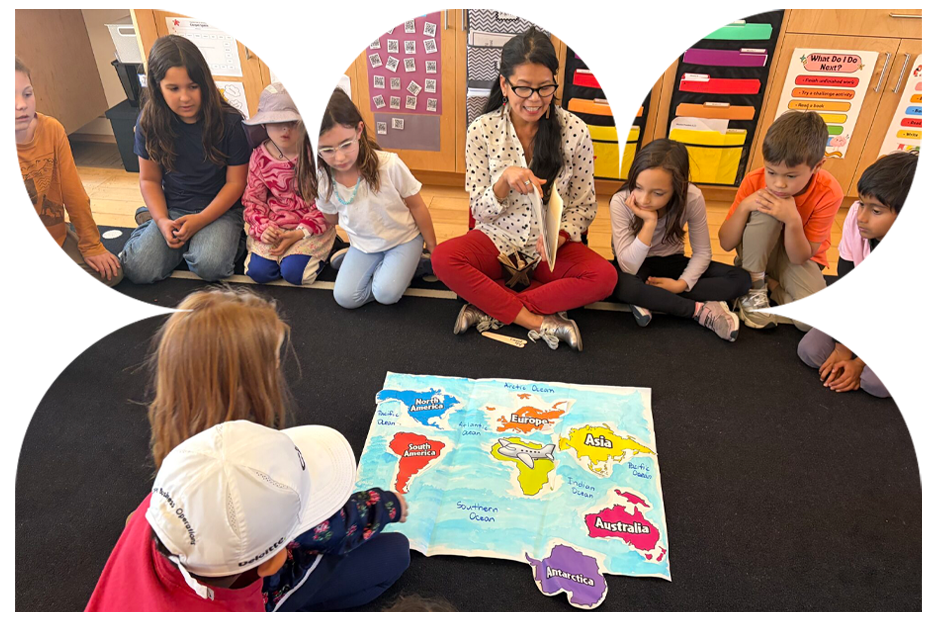
Kindergarten begins with the question, “What does it mean to belong?” First graders explore self and school community through asking “Who Am I? Who Are We?” In second grade, the focus expands to cultures and traditions, including how culture shapes the ways people live, work, and celebrate. Children make maps, create personal and family timelines, and explore rules, fairness, needs, and wants.
Third Grade
Third graders investigate what causes change in people’s lives and communities. Their studies include local and Indigenous histories, the Civil Rights Movement, and everyday changemakers. Questions about responsibility and working together connect historical learning to community life.
Fourth Grade
Fourth graders study people, places, and resource allocation. Students examine California over time, looking at what systems have changed and why. They explore how communities access, use, and share resources. Students learn about indigenous land use, Spanish Colonization, the journey of California into statehood, and the Gold Rush. As we explore these topics, students think critically about how these events impacted the land and the people in different ways. As we end the year, students are invited to think about what cities of the future will look like with our culminating cities project.
Fifth Grade
Fifth graders examine citizenship, power, voice, and community engagement. U.S. history, the Constitution, democracy, Indigenous communities, Reconstruction, and immigration provide contexts for questions such as “Who tells the story and why does it matter?” Students use research, discussion, and evidence to consider how people create change.
Across the Lower School, learning includes mapmaking, timelines, role-play, proposals, and debate. As students grow, they compare sources, recognize perspective and bias, and build arguments supported by evidence. Reading, writing, speaking, and listening are part of the work of learning to think like historians, geographers, and civic participants.
UPPER SCHOOL
History Values and Principles
The Black Pine Circle Upper School History Department covers a wide range of complex topics, and is guided by shared values and principles. Taking a holistic and humanizing approach to the study of human histories, we seek to foster the development of a critical consciousness amongst students.
We imagine this work as involving the practices of: Cultivating, Celebrating, Centering, Challenging, and Connecting.
BPC history courses work to cultivate empathy, self-worth and a sense of belonging through exploring shared histories. We celebrate a diversity of perspectives and stories across communities. We work to move historically marginalized voices, stories and perspectives from the edges of discourse and inquiry into the center of it.
Our work provides students with the opportunity to challenge assumptions, beliefs and hegemony, while strengthening their critical thinking and analytical skills. We connect ourselves to past and present historical contexts and movements. These values give students a foundation from which they can imagine building new possibilities and understandings about the world around them, so that they can move consciously into their future.
sixth, seventh & eighth grade
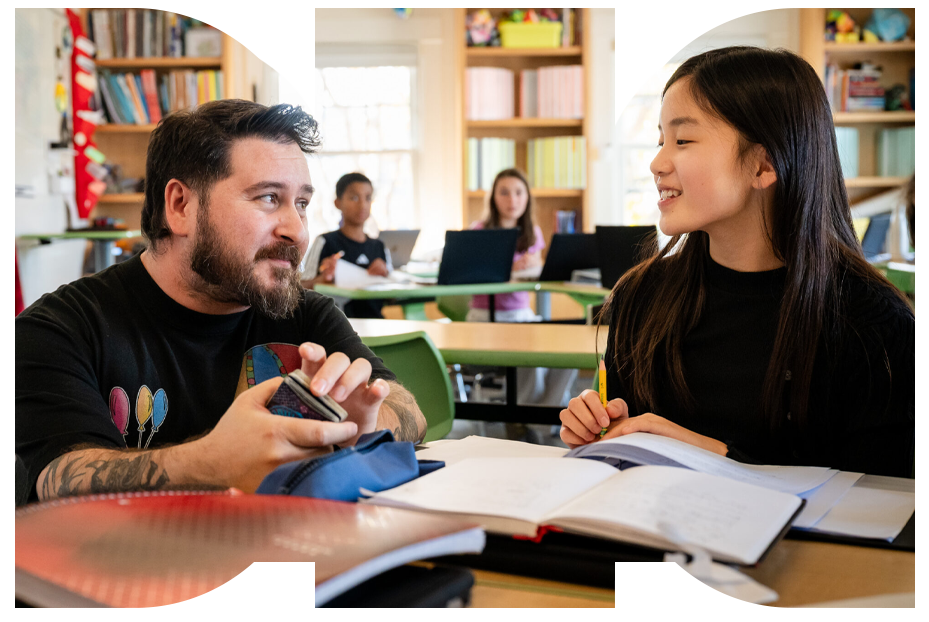
Students inquire into human history across time and space being guided by sets of essential questions.
Some of those questions include:
- What knowledge systems have humans constructed to understand the world around them? What are the traces of history that inform our own identity and community formations?
- How do human relationship systems (political, economic, social) get constructed, maintained, and changed over time?
- How did the advent of agriculture in human societies change the way we organized ourselves?
- What are the different elements of Empire building projects and what methods have been utilized to maintain those Empire?
- How do historians think critically about sources to gain a well-rounded understanding of the past?